Showing posts with label posted by Kristen. Show all posts

Wednesday, December 18, 2013

Teachers: Get your students out of stuffy classrooms and onto the online web.


"The classroom can feel rather stuffy compared to online," said one of my peers, Eliza Wooley. Her statement is more true than many people realize. The online web is alive and well, and it is advancing at an alarming rate. In order for students to be successful in their future careers, knowledge of how to use online tools is essential. Teachers of literature can help students gain these skills by incorporating certain forms of online rhetoric into their curriculum. Online rhetoric includes knowing how to use online databases for research, finding credible sources through social media, and embracing new skills in technology such as multimedia such as YouTube.

I once had a teacher tell me that I had to use five printed sources for an essay. This required me to go to a library and check out some books. Students before me that did not have access to computers or the internet probably have a hard time feeling sorry for me. That is fine. I’d probably have a hard time feeling sorry for me too. However, I told this story to some peers today and they groaned and said how sorry they were for me. With databases thriving and new material being added to them constantly, what good reason was there for my teacher to limit me to books that were published within the last ten years, but that were still outdated by the web’s standards? Newer information was out there yet I was limited to old information. Some might argue that because the book had to go through a rigorous publication process, it is better quality. Sometimes that is the case, but that is not always true. Online databases allow students to access high-quality peer-reviewed articles, and sometimes even books. Sometimes copyright law gets in the way of these high-quality articles being online, but for the most part, many scholars have embraced the internet and allow their work to be published online. Knowing how to use online databases is important to quickly accessing quality information. Instead of research papers taking months to write, they can be written in weeks, and no quality is lost.

Social media is generally looked at as being fun, but not being of much use in academia. This statement is only true if students do not know how to use social media for academic purposes. Teachers ought to get online and learn how to use social media academically, and then teach what they learn to their students. Students are already adept at navigating social media sites. Now, they just need some direction in how to use them for academia. Twitter allows hashtags to be searched, allowing students to find experts in fields of study that interest them. Facebook allows people to create searchable events, that students can then find and go to in order to connect with experts. Social media is fun, but it can also be a great tool for academia.

Finally, studying literature can really be enhanced by embracing multimedia. The multimedia I am going to choose to focus on is YouTube, although there are many other good options out there. I was introduced to the idea of using multimedia in literature by this blog post from Dr. Gideon Burton. I have never liked poetry, but seeing poetry put in a multimedia format helped me to better understand it. If teachers can embrace multimedia as a new way of approaching literature and encourage students to show their understanding through multimedia instead of, say, traditional essays, students will become more enthusiastic and more involved in what they are learning.

Creativity is a natural part of being human. New forms of creativity are being introduced thanks to the online web. New skills are being introduced too, skills that are absolutely necessary to know for future success. Teachers ought to help their students develop those skills and taste that success now by encouraging them to learn these new tools, create, and then share what they have created. Sharing can be scary, and some encouragement is needed, but once a student shares and gets good feedback, they will likely be more willing to venture out and continue on with what they have learned in a course, rather than light a bonfire on their essays at the end of every semester.

Let's Be Ishmaels


Back in the days of whaling, a whaling crew would follow a captain’s orders even if it ended up being to their detriment, as in the story of Moby Dick. The story of Captain Ahab chasing the white whale to the point of his and his crew’s destruction is well-known. Only Ishmael, an insignificant crew member, survived to tell the tale. Perhaps it was dumb luck that Ishmael survived the encounter with Moby Dick, but his telling of the tale is amazing because of all of the curation of research he does after his survival, and all of the mental notes he makes on crew members. Ishmael did not have a one-track mind, unlike Captain Ahab. And just like Ishmael, we need to be willing to look at all angles of literary study and abandon the angles that do not work (even if they used to be the best angles). The angle that is most important to look at right now is the digital and how it can enhance the study of literature today.

One way that the study of literature can be enhanced is by writing often and publishing quickly. Some might say that Herman Melville could have used a good editor when he was drafting Moby Dick. But the book has held its form, and because of the vast amounts of information, and seemingly unnecessary details drawn out in it, many different understandings can be drawn from it. Melville researched, curated, wrote, and published the book, and the book did not receive good feedback at first, just as the digital did not. But in time, the benefits of Moby Dick were seen and the benefits of the digital have been seen as well.

One of my classmates, Shelly Russon, recently wrote a post about how she did not want anything to do with the digital when she came home before her mission, and before that only used it to watch others, but never create anything herself. Now, because of the Digital Culture class, Shelly has learned how to filter and use the digital to help her in her literary studies, and other studies.

Learning how to filter through the digital is a critical tool as it helps us to find information quickly and put out information quickly. Not every idea that is put out there is great initially, but in time as feedback is given, and ideas are better developed, thoughts, papers, projects are launched that really benefit society. The digital allows things to be launched immediately too. Traditional modes of launch generally center on isolation, limited audience, and delayed publication.

People are so plugged in to the internet these days, why would we continue to use traditional modes as our sole means of studying literature? We must stop being Captain Ahab’s bent on one way of doing things and one end goal in mind (getting that essay written, getting that book finally accepted for publication) and start looking at the other opportunities for good around us. We must be Ishmaels and not be afraid to embark on a new voyage and then not be afraid to share our story afterward (even if it takes awhile for people to become interested in it).

A Reflective Post: Exploring the Digital


When I signed up for Digital Culture, I expected to only analyze the rhetoric of social media since at the time social was the only type of digital “culture” that I was aware of. We did analyze things like status updates, and hashtags, but much more briefly than I had planned on. Instead of merely analyzing the online world that I knew and had become accustomed to, a whole new world and a whole new way of thinking opened up to me, and I don’t think I’m ever going to be able to see the Digital the same way ever again. 

In Dr. Burton’s blog post A Call for Digital Explorers, he encourages, if not pleads for, us “to work through the learning curves of the new media not only for practical purposes, but for those lively impractical purposes of art, play, and discovery.” He begs us to no longer allow “the changes that technology thrusts upon us bury [us] in triviality,” and instead to “launch [us] to new lands.” He shows too that venturing out into the world of the digital does not need to be expensive or time-consuming; it just requires a new way of thinking and a new way of exercising the creativity that is already in each of us.

Over the course of the semester, I have taken Dr. Burton’s call to heart, and I have seen others take it to heart as well. I am so impressed, and so grateful, for Shelly Russon’s project advocating for e-readers for children. Not only did she cast away old notions that technology is harmful to children, but she also advocated for e-readers, which as far as I can tell are not entirely popular with English majors yet. We still love the smell of books and the ability to hold them. But these notions and traditional feelings did not stop Shelly from stepping out and exploring what else was out there. I was able to read the first draft of her paper, and was impressed with her argument about the benefits of children using e-readers. I actually even wanted an e-reader after reading it.

I was also introduced to a new way of seeing literature with Dr. Burton’s blog post Emerging Genres of Video Poetry. I have never liked poetry very much because I’ve never enjoyed dissecting the symbolism, imagery, line breaks, etc. I recognize it as a form of art, and respect it for that, but it has never spoken to me, and I’ve always felt like I was missing out on something. Therefore, I am grateful that some poets, or poetry enthusiasts, have embraced the digital, been willing to explore, and put poetry they or others have written in digital form. I actually enjoyed listening and watching the poems in Dr. Burton’s post and gained a new, if not completely different, appreciation for poetry. Now when I’m required to read a poem for an English class, I think I’ll look it up on YouTube instead of just reading it from my textbook.

This new world is not without its faults. It is still new territory being developed, and there are still dangerous items out in the Digital, so while we should explore, we should also be cautious. However, I’m grateful that many of my concerns about exploring (plagiarism, security, and publishing before an idea is fully developed) have largely been calmed. I’m glad that I know of new ways to do writing and research, and I’m glad that I’ve been able to receive the push I need to take a personal project in the direction it needed to go. I wouldn’t have been able to do these things without this class. I look forward to being part of digital culture, and hope that I’ll have many opportunities to introduce others to it as I continue to venture into this new world.

Wednesday, December 11, 2013

Quantitatively and Qualitatively Measuring My Site and My End Goal


The other day, Professor Burton and I talked about how I can qualitatively and quantitatively measure the success of my blog, EarlyHomecoming. I told him that I had already installed "Stats" to see how many people viewed my blog each day, and how many people visited it (spent time looking at pages other than the home page). I am currently averaging 258 views per day, with 37 visitors per day. Hopefully that visitors number will go up soon while the blog is in its beginnings, but my guess is that it'll always be lower than the number of visits.

To qualitatively measure my blog, I've decided to install a Poll that will ask visitors 3-4 questions about their experience on my site. If my template will allow it, I'll put the poll on a page labeled "Leave Feedback." If not, I'll install it as a widget on the side bar. I think a "Leave Feedback" page will look nicer and be easier to locate than a poll mixed in with other widgets on the side of my blog.

I'm thinking these are the questions I will ask my viewers. Let me know what you think:

1) Why are you visiting this site today?

2) On a scale of 1-5 how useful is this site to you? (1 being not very useful and 5 being very useful)

3) What features or topics on this site are useful to you?

4) What features or topics would you like to see?

The questions will be open-ended to allow for a broad range of answers. I'm mostly curious at this stage what people think.

I also have decided that I need to come up with an end goal for my blog. I don't want to be blogging about coming home early from a mission for the rest of my life. I think for right now I'm going to make a goal to collect a certain number of stories from each group under "Reasons" and "I'm Trying to Help," compile the stories in the book, add my own bit of analysis and research (and hopefully get permission to include research done by Kris Doty or others), and publish a book on this subject.

Those are my thoughts for now! Please share your thoughts with me, particularly what you think about my proposed questions for a poll and my end goal of publishing a book.

Friday, December 6, 2013

My Small but Significant Triumphs with Online Tools

This week I've done some heavy aesthetic editing to my website. I got the pictures back from my photographers and was very excited to get them on my site.

I thought that once I got the photos, I'd get a new template for my site and have a cool picture sliding feature on it. Instead, I spent hours on Wednesday wrestling with new templates and sliders. It turns out that to really get what you want from a website, you either have to find the perfect template that is also user-friendly or learn CSS. So, I plan to eventually learn CSS. Until then, I'm going to keep my original template but "jazz it up" as best I can. I'm also going to look into plug-ins and see which ones will work with my template. A lot of this so far has been trial and error.

Anyways, after deciding to stick with my original, very user-friendly template, I began to resize my photos because the original photos are 13+MB and WordPress will only allow up to 4MB photos. I found a great online tool for resizing pictures. It's called PicResize and it resizes single photos or large batches of photos quickly.

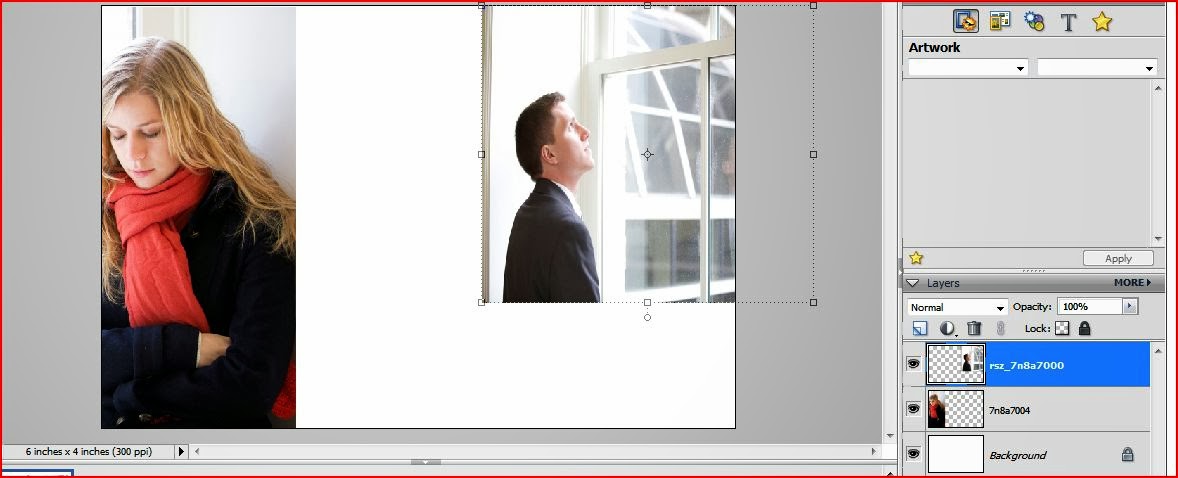
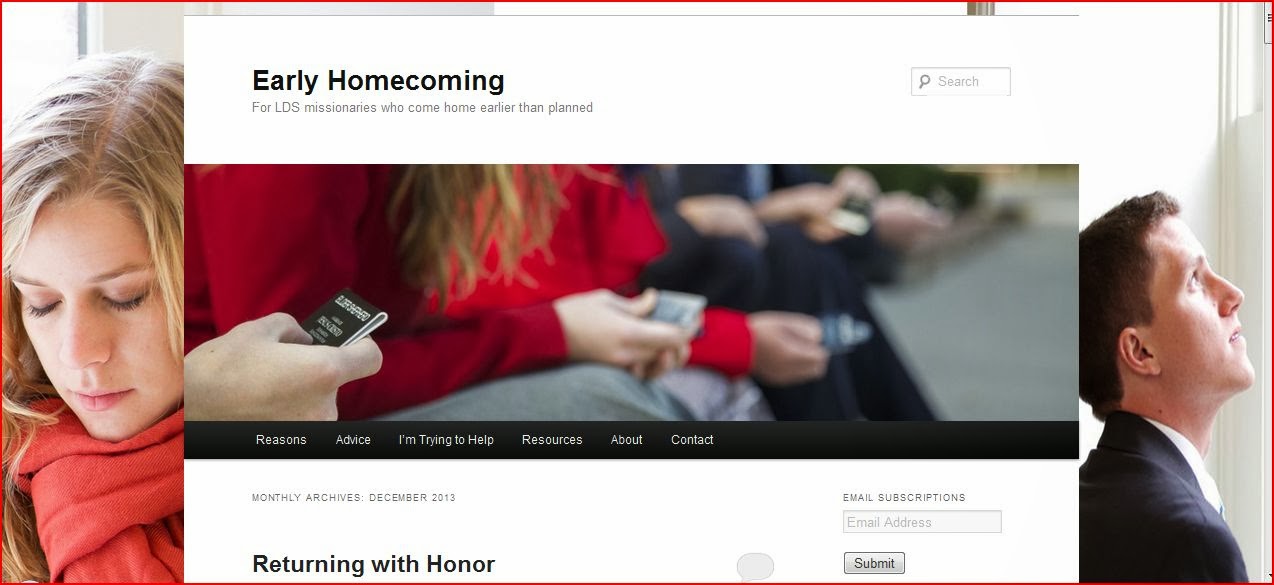
After that was completed, I spent some time in Photoshop creating a good background for my site. This was again a lot of trial and error. I had to place the photos on a blank layer and then spread them the perfect length apart to get them to look the way they do on my site.
This is what my website's background looks like in Photoshop


Thankfully, it turned out great:


I'm really pleased with the way my site looks now. I wrote two blog posts this week and I think I'm going to make a goal to write a post 1-2 times per week. Hopefully I'll be able to get some guest blogging going once a month and eventually some question and answer blogs. Right now I'm trying to figure out how to get my site to post excerpts of the blogs with a "Continue Reading" option on the front page rather than the entire blogs automatically. Some templates come with that feature automatically, but as far as I can tell, mine doesn't.

There is still more work I'd like to do on the blog, such as adding pictures to my Pages (Reasons, Advice, etc.) editing on those pages, creating other pages such as "Submit Your Story," and a more user-friendly contact page. I'd also like to create a Facebook page and get readership that way. I've already created a Twitter account (@EarlyHomecoming) and am learning now the best way to tweet and get more readership. All of this will come with time. Right now, I'm just excited that it's up and going. I've received lots of support from friends and family for my project, and from others that I don't even know. I hope that anyone who needs it will soon be able to easily find it.

Saturday, November 30, 2013

Working Post: My Missionary Project

search.creativecommons.org
Originally, I was going to create a website for missionaries that come home early for my final project. I have created that website, and I like it. However, I have decided to convert that website into a blog because as I continued to do research and meet others that came home early through my website (and those who want to help) I realized that there are so many grey areas when it comes to missionary work. And although I had an experience with coming home early from a mission, I have realized that I am by no means an expert on the subject. I would like to become on though and I think a blog will be one of the best ways to get started.

So, I have decided to transform my website into a blog. By making it a blog, I will be able to receive feedback through comments and have a more approachable format for people to contribute their own stories through guest blogging. I can ask my readers what they would tell someone in a grey-area situation instead of trying to come up with a solution for the situation largely on my own. I can also talk about missionary work in ways more than just coming home early, although I do plan to have coming home early be a focus of the blog.

Main Purpose
search.creativecommons.org
The main purpose of my blog will be two-fold: (1) Have a place for those that feel like "misfits" in the world of LDS missionary work to come and read stories from others and to receive advice on what steps they should consider taking next in their life and how they can still be missionaries even if they do not serve the typical full-time mission, and (2) To change the LDS culture surrounding missionary work. This is something the Church is already trying to do; missionary work is not just for full-time missionaries. We know this. But for those that want to serve, there are other options than serving full-time proselyting missions and these options need to be more well-known.

Initially, my blog will probably focus more on missionaries that come home early, but eventually I hope it'll include topics that go beyond coming home early from a mission and focus on other topics that need to be talked about but are generally ignored concerning missionary work. (E.g. Serving the full amount of time but still feeling like a failure, or that you could have done more, etc.). 

Preliminary Exploration
I have read blogs, articles, and gone to presentations regarding early-returned missionaries. (Yes, I know I said I hate that term and I would prefer it not to be used, and I still think it is a pejorative in LDS culture, but I hope to change that through my blog). I have written a lot on my website, and I will probably use what I have written there for my blog posts. I have also used Wikispaces to curate other articles and blog posts on the subject, as well as ideas for my blog both in subject matter and aesthetics. 

Relevance
My project relates to this class by using digital means to get something very important out there. Originally I tried to talk about this subject through traditional means, i.e. writing a book and getting it published through Deseret Book. That did not pan out, however, so now I'm trying to talk about it through digital means. I think this will be better for my audience since the topics will become more of an open discussion rather than me generalizing my experience onto others that go through similar experiences. I think that this more open format will help others a lot more than my book would have done.

Format
My format for this open discussion will be a blog. Eventually, I may create a website, but that will not be until I feel comfortable with the rhetoric of websites and feel like I know and understand enough about these difficult topics to create a website. Later on, I may rewrite my book and submit it for publishing again. But for now, my format will be a blog.

Outlet
search.creativecommons.org
Professor Burton suggested I do a press release for my blog once it is ready. Does anyone know how to do a press release? Who should I contact?

Other thoughts I had were to do maybe a guest blog post on a more popular Mormon Blog site. I could contact whoever controls the Mormon Archipelago site and ask that my blog be included in the archipelago.  I could also contact reporters and see if they'd be interested in doing a story about my blog.

And, of course, I could definitely make a Facebook page for my blog. Twitter is also a useful option. In order for these two to be useful though, I'd need to do some advertising with the above outlets.

Curation
Samuel Adams in his movie Returning with Honor
My primary sources have largely been my own experiences. However, I have also read several blog posts  and articles online about coming home earlt and stored them in my wiki. I have a DVD that I borrowed from Dr. Burton called Returning with Honor that I plan to watch tomorrow, and probably write a blog post about (then put on my blog once the blog is set up). I watched a four minute clip of the movie here. I encourage anyone else interested in my project to watch the clip too. He does a good job of capturing what early-returned missionaries feel when they come home (at least, what I felt, and what others who I have met have felt). 

For secondary sources, I have looked at the Church's website and read more about missionary work to find out what are cultural expectations and what are the Lord's expectations. I wrote about what I found throughout my website and stored the articles in my wiki. 

For community, I went to a presentation from Dr. Kris Doty and her team of students that for two years studied the effects of coming home early from an LDS mission. At this presentation Dr. Doty and her students reported their findings. I emailed Dr. Doty and her lead assistant after the presentation to see if I could publish her findings on my website after she and her students had written them up, but I haven't heard back from either yet. Perhaps once my blog is more established, I'll email her again.

Social Proof
I've used Facebook to gather initial social proof regarding my subject as evidenced in my blog here. I have also left comments on blogs and reached out through Twitter to gain social proof for my subject. So far, I have received enthusiastic replies about my project from both early-returned missionaries and others who wish to help early-returned missionaries. I have also received enthusiastic replies from those I have told about expanding my project to encompass more than just early-returned missionaries, although the number of people I have told about that so far has been significantly smaller.

I made a good connection too with someone who is excellent at blogging and using Twitter. She is in one of my editing classes and initially I hired her to be an editor for my website until deciding to turn it into a blog. When I told her about my decision to turn it into a blog, she supported my decision and told me that if I would like to do a blog consultation with her, she'd be happy to meet with me. She thinks we make a great team and would love to continue working with me. That made me very happy (and relieved to have an expert at blogging and Twitter want to work with me!). I made an appointment to meet with her on Monday for an hour and a half. To prepare for the appointment, I have been looking at LDS blogs, self-help blogs, and personal blogs to gauge what I like and don't like about blogs and to get a better idea of what I want my blog to look like and sound like.

Next Steps
My next steps are to meet with my blogging consultant, get the blog set up, and then write like crazy. I'll probably get 3-4 blog posts ready to go to post as soon as the blog is up. I won't wait until the blog looks perfect before I get it going, but I will want to wait until I think it looks at least professional and presentable before I start advertising it through different outlets. 

I'm also debating about the name of my blog. Should I should still use my domain earlyhomecoming.com for the blog's url and name the blog "Early Homecoming," or should I change it to something else to better encompass other issues within missionary work? Any thoughts? 


Monday, November 25, 2013

Outlets for Research

I have many ideas for outlets for my research on missionaries that come home early. Here are a few ideas:

1) Guest blog on an appropriate blog. This would probably be a blog like Times and Seasons or Forward Walking or any other blog that seems appropriate in the Mormon Archipelago.

2) Interview with a friend of a friend for a magazine/newspaper publication. My friend knows people who work for The Universe and a Utah Magazine (not sure which one). She said these people would probably love to interview me. Let's hope so!

3) I've already created a Twitter called @EarlyHomecoming. I don't actively use it yet, but it has a few followers. I plan to use it more once I launch my website.

4) Possibly Digital Humanities Now, but I'm not sure if my website is exactly what they are looking for.

And I think all of my teammates would benefit from submitting their papers to the Northwest Undergraduate Conference on Literature or Re: Humanities. I especially think Re:Humanities is looking for what they  have to offer. They'd have to hurry to make the December 1st deadline for Re: Humanities, but Re:Humanities does accept and consider late submissions. There is some travelling involved if they get accepted to one of these conferences, but it would be a fun experience if they could manage it!

Monday, November 18, 2013

For Shelly's Research on Children and the Internet


sheknows.com/parenting/articles/810053/how-to-monitor-your-kids-on-the-web
I've been really interested in Shelly's research regarding children and the internet. For many years now, it seems like the general consensus has been that children should not be on the internet because the internet is not a safe place for them. Indeed, I found some studies that backed this claim up. However, with the growing importance of the internet in business and daily life, some are advocating that children ought to be using the internet. Those claiming that children ought to be using the internet do not believe that children should be able to use the internet freely, or without guidlines, but that rather parents should be proactive in teaching their children good internet use. They should teach their children about improper internet use and help steer them away from pornographic sites. There are movements going on too to stop images that would harm children, or child abuse online (see the article about Google and
Microsoft below).

After doing just a little bit of research, it seems that children should be able to get on the internet with proper parental guidance. The internet is a tool that can be used, like most, for good or evil. But with proper guidance it can be an amazing tool for creativity, schoolwork, and scholarship. Instead of steering children away from the internet, let's guide them through it.

I hope these links help you in your research Shelly! Best of luck!

Articles

Kids on the Internet: It's a Good Thing

Family and Media: A New POLIS Report

Google and Microsoft Agree Steps to Block Abuse Images

What Are They Doing Online?

Scholarly Articles

Children, Adolescents, and the Internet: A New Field of Inquiry in Developmental Psychology

Guide and Seek

Long Term Study of Safe Internet Use of Young Children

Personality and Motivations Associated with Facebook Use

Opposition to Consider

While Their Kids Sleep, These Parents Pull of This Amazing Stunt

The Children's Internet Protection Act

Cognitive-Behavioral Approaches to Outpatient Treatment of Internet Addiction in Children and Adolescents

Why are Children Attracted to the Internet? The Role of Need Satisfaction Perceived Online and Perceived in Daily Real Life

Friday, November 15, 2013

Name, Identity, and Meaning: How the name "ERM" or "Early Returned Missionary" Ought to Be Eliminated

In my last post, I talked about the names of the six main characters in Moby Dick and did a bit of amateur research on the origins and meanings behind those names. I know that some authors name their characters specific names because the name will add deeper meaning to the character and to the story. I wanted to see if this was the case with Herman Melville. What I found was that for the most part, the names in Moby Dick could be interchangeable with other names, but two at least seem to have been deliberately given their names (Ahab and Ishmael). We see the biblical references surrouding those names pretty consistently throughout the novel. Yet even those characters, could have been given a different name (say, Solomon instead of Ahab, or Jacob instead of Ishmael. The names would have served the same purposes and meanings).

I wanted to do more research into names and the meaning they hold for us. I asked my friends on Facebook to answer a series of questions. I originally posted one of them also on Google + and Twitter, but only one person replied to my Google + post and no one replied on Twitter (sad!), but I got a lot of replies on Facebook so I decided to just stick with them. I posted the questions about once every hour, and some people really started getting into them. It was fun for me to receive the replies. Now, I'm going to be a good English major and analyze those answers and draw some conclusions from them.

Let's start with the least intimidating of the questions: Why were you named ____? (Were you named after someone? Did your parents just like the name?) What does your name mean? If the main character of a book was created with you in mind, would you want the character to have your name or another name?

Here were the answers:
As I suspected, everyone knew why they were named what they were named and several knew what their names meant. And most everyone that answered the third question said that they would be fine with their name being used as the main character in a book, which surprised me as I thought more people would want their identities kept secret, but it turns out most would be excited to have the main character in a book named after them. Another person identified well with a famous book character. This to me showed that people identify strongly with their names; in other words, names are a strong part of a person's identity. If someone doesn't like their name, they generally go through some lengths to change it, right? They do not want that name as part of their identity. (Yes, I know I completely abused the singular vs. plural rules of grammar, but no one really cares, right?).

Okay, next I decided to start asking about something closer to my heart. I wanted people's instinctual reactions to the names (or titles) "returned missionary" or "early returned missionary." Here are the replies for "returned missionary."


The responses vary from serious to light-hearted. If everyone was honest about writing down their first-instinct response then the general pictures that comes to mind is of a young LDS male, desirable for marriage, who just did something amazing, although he might not have a clue what he's going to do next and he's probably going to be awkward until he settles back in to normal life.

I'd say that's generally the first thing that comes to my mind too. Again, the answers varied, but those were the general agreements. 

Here are the responses for "early returned missionary":


The answers to this questions were much more serious. Usually people responded with some kind of reason for why the missionary returned home early, and it's never a happy reason. Most also show a genuine concern for the person's well-being. Some said that they usually think, "None of my business," which some could interpret as "I want nothing to do with this," but I think it was meant more as, "It's not my place to judge this person." Others alluded to dying or not being able to "hack it." One person said, "Relief."

None of these responses are wrong or bad. They are all accurate in one way or another. Most are kind. But they are markedly different from the spiritual/light-hearted responses the name "returned missionary" received. "Early returned missionary" is different from "returned missionary."

Do you see where I might be going with this? Probably. Humor me though while I explain/expound.

 When I came home early from my mission (physical illness was the reason), I was fortunate enough to have a good support group around me, and for the most part I did not feel harshly judged for coming home early. Yet while I did not exactly feel judged, I did feel "marked." Everyone in my ward knew I had come home early. My friends knew. My family knew. People asked me if I was going to go back to the field. They asked when. When I chose to stay home, people asked me if I had forced myself to go on a mission when maybe I wasn't supposed to. I didn't have answers to these questions. I just wanted them to stop. I had served a mission!! It was short, but I had served one! But I hadn't served it for the expected amount of time, and therefore I had failed. I had done something wrong and I hadn't repented well enough for it; I hadn't had enough faith; because if I had repented well enough or had enough faith I would have been healed and I would still be on a mission. God would still be able to use me. 

But no, I was an early returned missionary. An ERM. I cringed every time somebody called me either name. It hurt. "That title will haunt me forever," I thought. 

I asked my friends one last question. Would you say that "returned missionary" is a name one earns or is it a name that should be given to anyone who comes home from a mission?


It sounds like the general consensus was, "If you served a mission and are now home, no matter the length of time in the field, and no matter your thoughts and intentions while serving a mission, you are a returned missionary. Whether or not you served honorably is another thing."

I was so surprised by these responses. I thought most people would say that, "You are a returned missionary if you served the 18-24 months or if you came home early but it wasn't your fault." But no, almost everyone said that if you serve a mission and come back, you are a returned missionary.

So where did Early Returned Missionary/ERM come from?  My guess is that it started on a forum somewhere for those trying to help missionaries who return home early. It sounds like it was a easy way to distinguish online between someone who came home early and someone who served the amount of time. "Returned missionary" is still in the title, but it is marked with "Early." 

Some of my friends think that we should just get rid of the terms "returned missionary" and "RM" altogether. They think it encourages us to label each other, or in other words to judge each other, and in a church that emphasizes Christlike behavior those labels ought to be done away with.

They might be right. But even if they are, I think that the names "returned missionary" and "RM" are going to stick around a little longer. As members of the church, we've been encouraged to stop calling ourselves "Mormon," but that name is dying hard. Why? I think its become part of our identity for so long.

What I personally would like to see happen is the death of the name/term/title/(whatever you want to call it) "Early returned missionary," or "ERM." Especially "ERM." I recognize that it is not meant to hurt those who did return early, (or if it is, shame on whoever uses it that way!), but it does. It hurts a lot. It's not a title of honor. It's not something I want following me around the rest of my life. Even if I returned home early because I made a mistake and was caught, I would  not deserve to be called an ERM the rest of my life. It's like The Scarlet Letter that Hester Prynne has to wear the rest of her life. She sinned and she needed to be held accountable for that, but being marked for the rest of her life was unfair, especially when so many others were committing sins (even the same sin!) all around her.

On my website, www.earlyhomecoming.com, I avoid the terms "early returned missionary" and "ERM." I recognize that many, many people are using these terms for good as they study the effects of returning home early from a mission. It's a non-wordy way to say, "a missionary who returned home early." But it's unfair, and I would hate to see it become a popular term used in the church. So please, let's drop it. And maybe, let's drop "returned missionary" too, and just leave it at "I served a mission."

There is more that I can go into about this. I could get all doctrinal about missionaries and missionary work, but I'm not going to, at least not in this blog post. Maybe in a future one. For now, I'm just going to ask that we remember the importance of names, how they serve as our identities, and how no one wants anything to tarnish their name, not even a well-meant title. If we don't like something, we get rid of it. We change our  names. But if we're in a society that won't let us forget our names, our identites,  we either become depressed or indifferent, or we escape. According to a study done by the University of Utah, "34 percent of those who returned early went through a period of inactivity in the church. One third of those never returned to activity." 

This is a problem. I don't know how many of those 34% were called "ERM's" or "Early Returned Missionary," but I'm positive that they felt marked in some way.

So here's my call to action: Let's get rid of the term "ERM" or "Early Returned Missionary" from our vocabulary, from our culture, as much as possible. I recognize that the names will likely still be used in some circumstances for good, like as in forums, but as much as possible let's just get rid of them. Let's stop calling each other undesirable names. Let's not be like Captain Ahab's mother who named him after a wicked king because of a "foolish, ignorant whim."  Let's not wrong each other because we have hard times. Let's just help each other. Let's change our culture.